
AUTO INJURY · WHIPLASH · SOUTH JORDAN
Auto accident & whiplash treatment in South Jordan, measured and documented.
Whiplash and auto injury evaluation, corrective rehab and the detailed records your claim needs. Most auto injury patients have no out-of-pocket cost. Hablamos español.
In practice since 1998 · Advanced Certified CBP® · Works with most Utah law firms

AFTER A CRASH
Feel okay? Get checked anyway.
Whiplash symptoms often show up hours or days after a collision, even a low-speed one. An early, measured evaluation gives you a clear baseline, a plan, and a record your insurer or attorney can rely on.
Severe symptoms? If you have a severe headache, loss of consciousness, weakness, or loss of bladder or bowel control, go to the emergency room or call 911 first. We can see you once you’ve been cleared.
Common symptoms after a car accident
Neck pain or stiffness
Headaches
Upper or lower back pain
Shoulder or arm pain
Numbness or tingling
Dizziness
Trouble sleeping
Pain that gets worse days later
THE MIDVALLEY DIFFERENCE
What we measure and document
“My neck hurts” is hard to prove. Measurements aren’t. We record how the crash happened, what changed in your body, and how you respond to care, using the same tools at every re-evaluation.
HISTORY
Mechanism of injury
How the crash happened: direction of impact, head position, seat belt and headrest. It shapes what we look for.
MOTION
Digital range of motion
How far and how comfortably your neck and back move, measured digitally rather than estimated.
POSTURE
PostureScreen analysis
Head, shoulder and pelvic position measured from photos, so changes are easy to compare over time.
IMAGING
Digital imaging & PostureRay
When clinically necessary, digital X-rays analyzed with PostureRay, including motion views to check for ligament injury and instability.
FUNCTION
NDI, Oswestry & RAND-36
Standard questionnaires that score how your symptoms affect work, sleep and daily life.
PROGRESS
Re-evaluations
The same measurements repeated during care, so your records show how you are responding.
One patient after a car crash, measured: initial exam and re-evaluation at visit 36
-
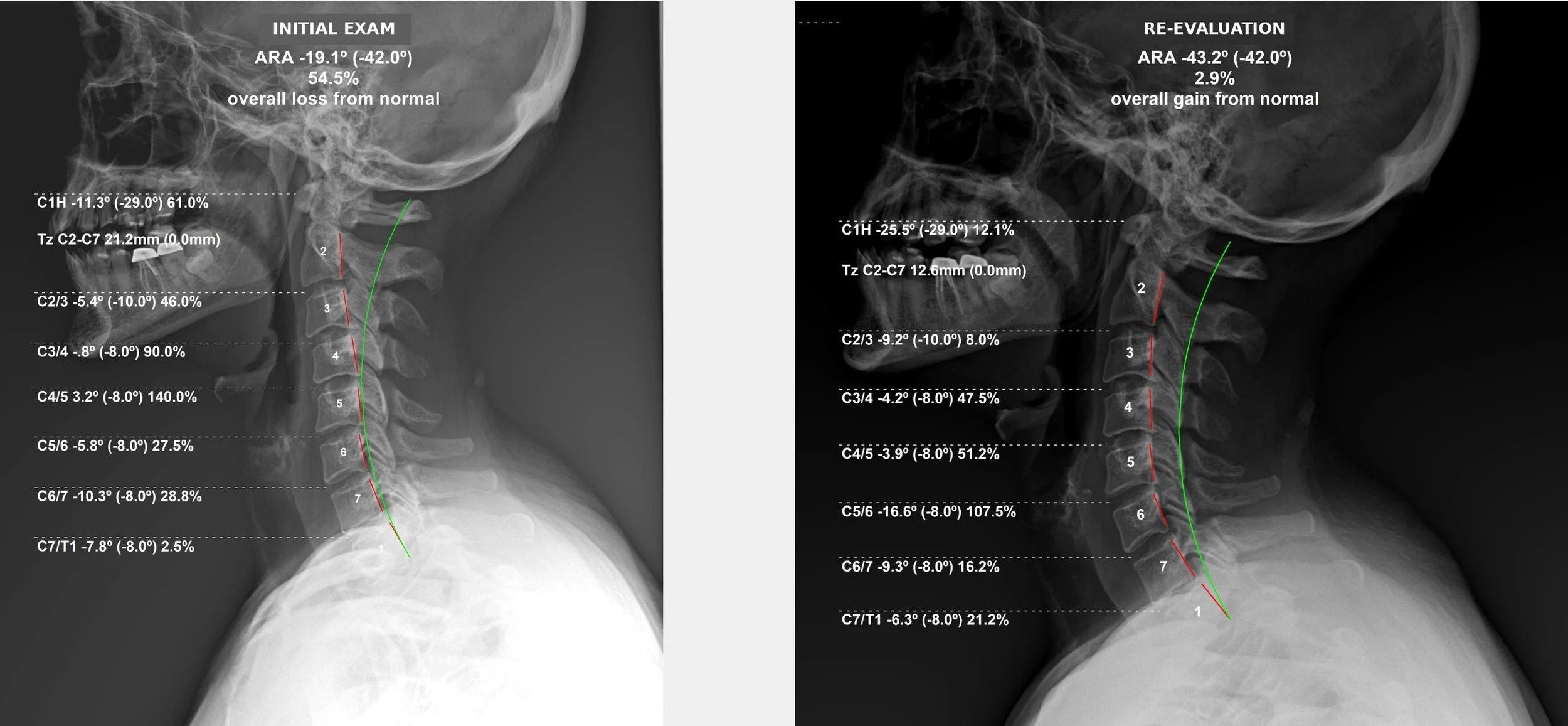
Neck X-rays (side view), measured with PostureRay
Initial exam (left) and re-evaluation at visit 36 (right). The neck curve went from 54.5% below normal to within 3% of normal, and forward head translation dropped from 21.2 mm to 12.6 mm.
-
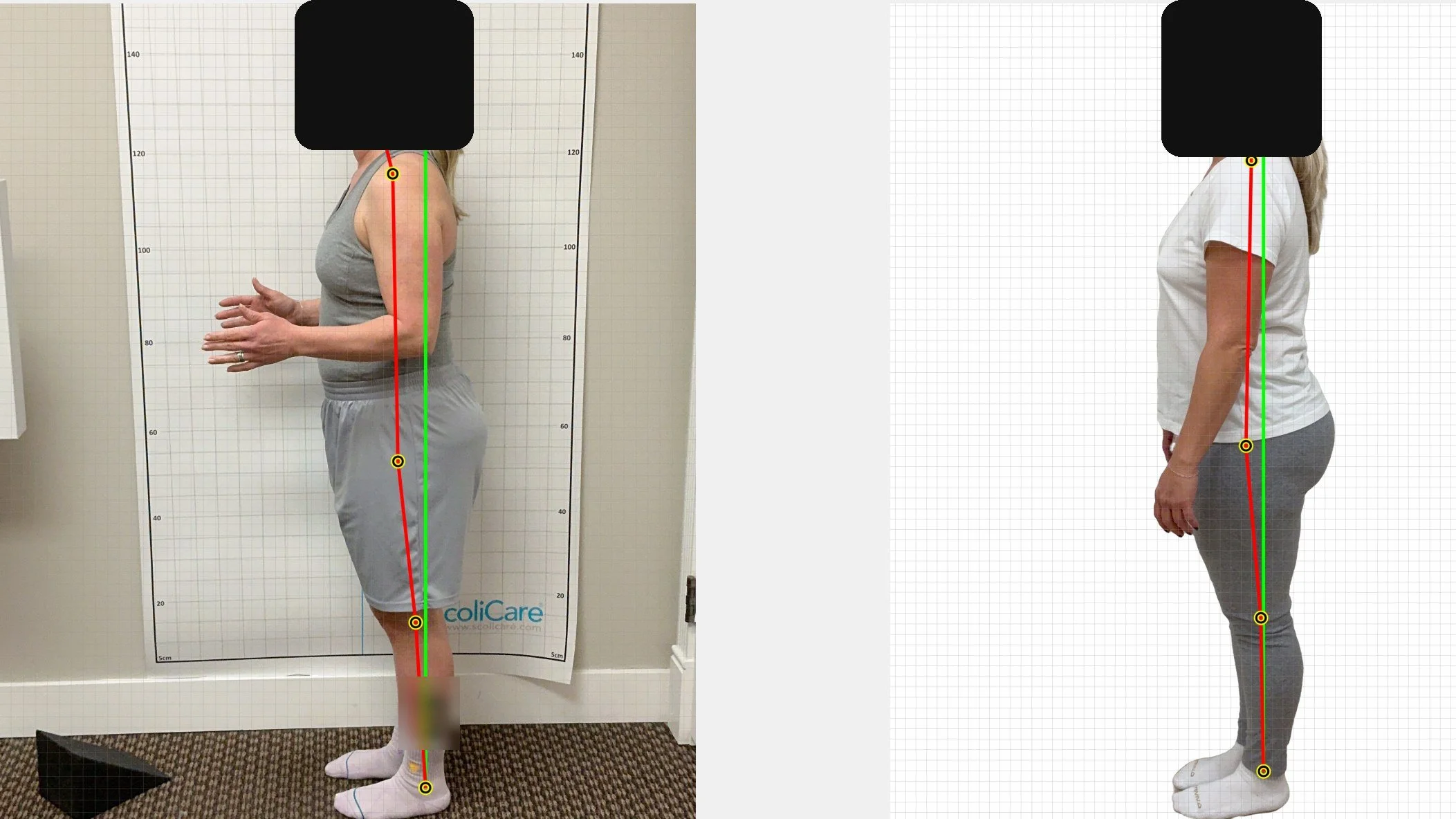
PostureScreen, side view
Total side-view posture shift went from 4.16 in to 2.87 in, and head shift off the plumb line from 1.70 in to 1.16 in. Face and identifying marks covered.
SAME PATIENT · INITIAL EXAM → RE-EVALUATION AT VISIT 36
The numbers behind the images
Neck curve, X-ray (normal −42°)
−19.1° → −43.2°
Forward head translation, X-ray (normal 0 mm)
21.2 mm → 12.6 mm
Posture shift, side view (total)
4.16 in → 2.87 in
Head shift off the plumb line
1.70 in → 1.16 in
Neck Disability Index (lower is better)
22% → 14%
RAND-36 physical functioning (higher is better)
35 → 90
The same measurements document your findings at the first visit, track how you respond to care, and record what remains at the end of care for future-care recommendations. Shared with written permission. Individual results vary.
YOUR CARE
Whiplash rehab that goes beyond adjustments
Your plan is built from your findings and changes as you improve. Our hands-on team sets up and supervises your traction and exercises, so you’re never left to figure it out alone.
01 · SETTLE
Calm the injury
Gentle, specific adjustments and guided movement to reduce irritation and protect healing tissue.
02 · RESTORE
Rebuild motion and strength
Supervised rehab exercises, whole-body vibration and decompression when a disc is involved.
03 · CORRECT
Address the structure
Where measurements show it, CBP® corrective traction and mirror-image exercises for spinal alignment.
Where your rehab happens
-
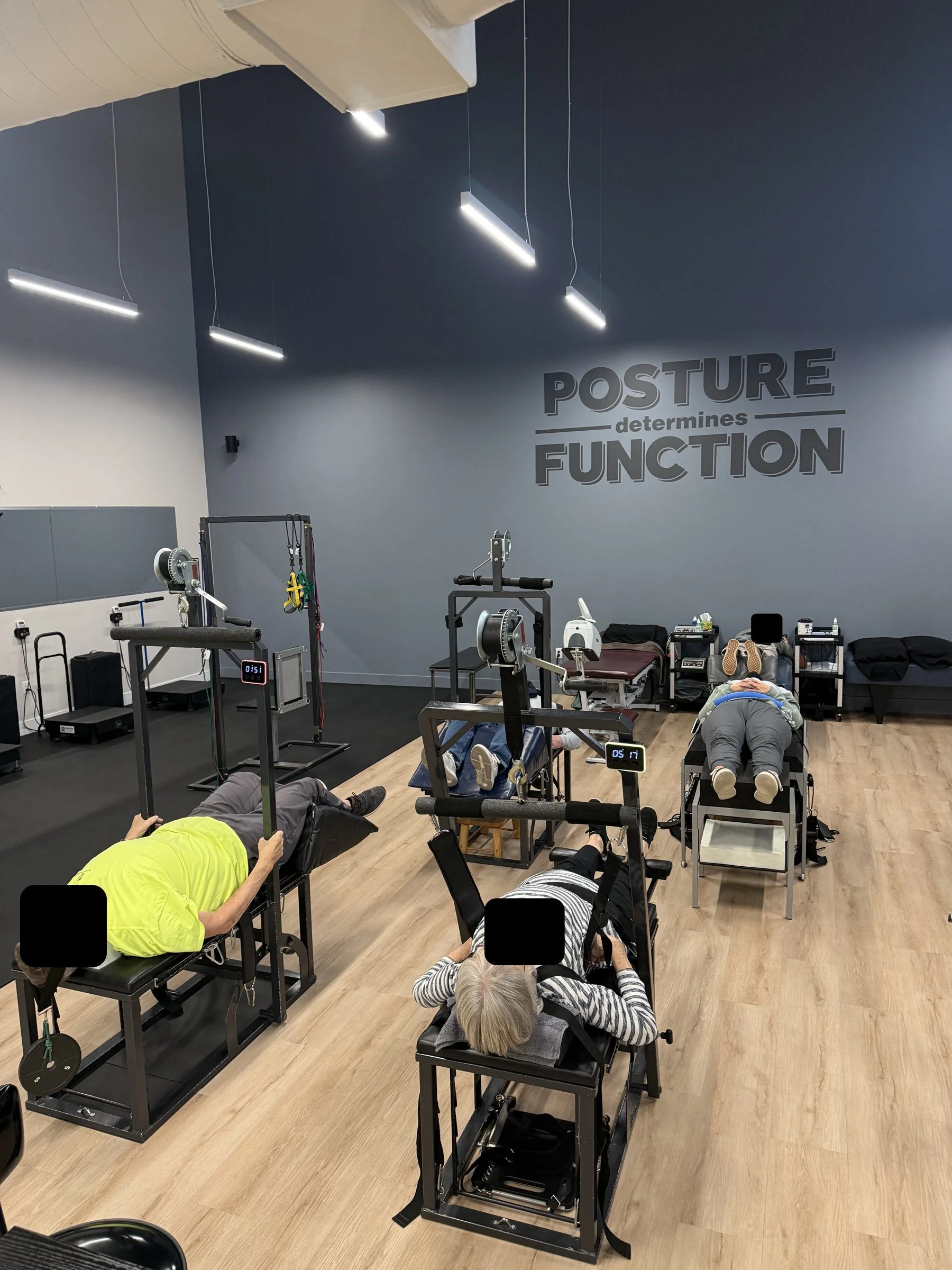
Corrective traction stations
Set up, timed and supervised by our team at every visit.
-
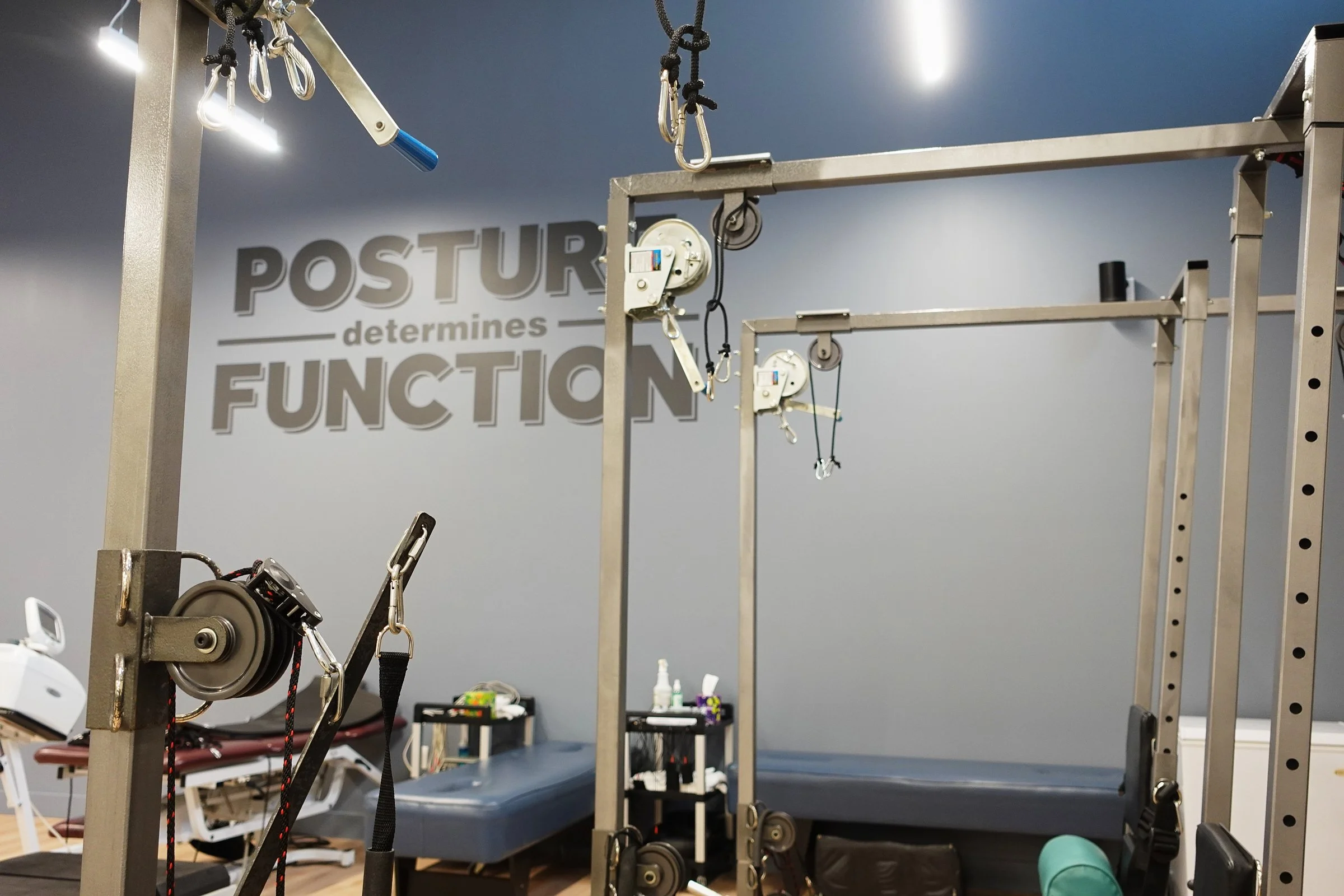
The rehab floor
Where supervised exercise, whole-body vibration and traction happen.
COST & COVERAGE
Most auto injury patients pay nothing out of pocket
We bill your auto insurance directly. If you have an attorney, we can work on a lien. Before care begins, we’ll walk you through how coverage works for your case, in English or Spanish.
Auto insurance
We bill your auto policy directly and explain your coverage before care begins.
PIP already used? A lien
PIP is often used up by the ER, ambulance or diagnostics before you reach us. If another party was at fault, a lien between you, your attorney and our office lets you start or continue care. All parties are reimbursed when your case settles.
No attorney? No problem.
You don’t need a lawyer to start care in Utah. Your own policy’s personal injury protection (PIP) covers your care first, no matter who caused the crash. If your bills go beyond your PIP limit, that’s when you’ll need an attorney.
What happens after you call
DAY 1
You call or book
We ask about the crash and your coverage, and get you in as soon as we can.
FIRST VISIT
History and measured exam
Mechanism of injury, posture, digital range of motion and questionnaires. Imaging only when clinically necessary. Plan on about 45 to 60 minutes, so we can record your accident details carefully.
REVIEW
Review of findings
On your second visit: what we found, what it means and the plan we recommend, with time for your questions.
CARE
Treatment and re-evaluations
Supervised care with scheduled re-measurements so you and your providers can see progress.
FIRST COUPLE OF WEEKS
A complete report, ready to share
Once we’ve gathered your prior records and completed our exam and X-rays (or ordered other imaging), we put together a complete report for your attorney or insurance company. Future-care recommendations are added when appropriate.
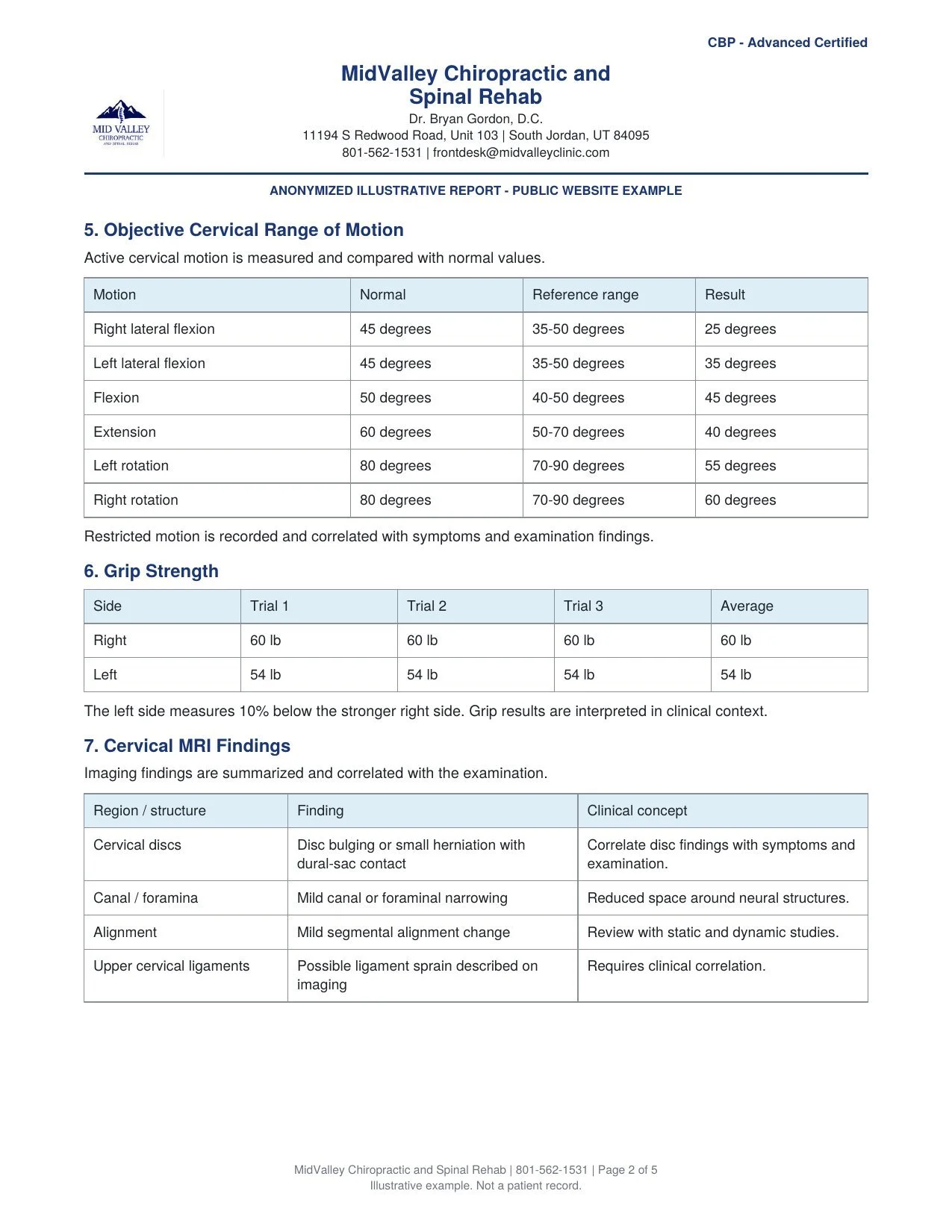
WORKING WITH YOUR ATTORNEY
Objective findings. Clear documentation.
If you have an attorney, we coordinate directly with their office and keep your records complete and consistent. A complete initial report is typically ready within the first couple of weeks. If you don’t have an attorney, you can still start care with us.
What our reports include
Mechanism of injury
Croft classification
AOMSI & instability analysis
NDI & Oswestry scores
Radiographic comparisons
Future-care statements
Shown here: a page from our illustrative sample report (not a patient record).
Car accident questions
-
Most auto injury patients have no out-of-pocket cost. We bill your auto insurance directly and, if you have an attorney, can work on a lien. We’ll explain how it works for your case before care begins.
-
Whether you were hit or at fault, your own personal injury protection (PIP) pays for your care first. Sometimes PIP is no longer available by the time you come to us, for example because it was used for the emergency room, ambulance transport or other diagnostics. If another party was at fault, we use a lien: an agreement between you, your attorney and our office so you can start or continue care. When your case settles, all parties are reimbursed.
-
No. You don’t need a lawyer to start care in Utah. Utah is a no-fault state, so the personal injury protection (PIP) on your own auto policy covers your injury care first, no matter who caused the crash. Your insurance company then seeks reimbursement from the at-fault driver’s insurer. You will need an attorney if your bills go beyond what your PIP coverage allows. When that happens, we coordinate directly with your attorney’s office, and we work with most law firms in Utah.
-
Yes. Many people feel fine at the scene and notice pain later. If you have severe symptoms such as a bad headache, weakness or numbness that is getting worse, go to the ER first.
-
As soon as you can. An early evaluation gives you a baseline and a clear record, even if your symptoms seem mild.
-
Item descriptionOnly when clinically necessary. We decide after your history and exam, and we explain why before taking any images.
-
Yes. Dr. Gordon is fluent in Spanish, and so is our team. Hablamos español.
BOOK YOUR VISIT
Book your car accident evaluation
11194 S Redwood Rd, Unit 103, South Jordan, UT 84095. Serving South Jordan, West Jordan, Riverton, Herriman, Bluffdale, Saratoga Springs, Draper and Sandy, with crash patients referred from across Utah, Idaho and Wyoming.
Two ways to book
By phone: call (801) 562-1531 and we’ll email your forms to you.
Online: start with the five car crash forms listed here, and we’ll call you to schedule once we receive them.
Hablamos español.
Your car crash forms
5 short forms. Please complete them in order:
1. New Patient IntakeStart → 2. Oswestry Low Back Disability QuestionnaireStart → 3. RAND 36-Item Health SurveyStart → 4. Neck Pain and Disability QuestionnaireStart → 5. Motor Vehicle Accident QuestionnaireStart →We’ll call you to schedule once we receive your forms. Prefer the phone? Call (801) 562-1531 and we’ll email them to you.