
POSTURESCREEN · POSTURERAY · DIGITAL ROM
A posture and spine evaluation you can see
Before we recommend care, we measure. Your evaluation records your posture, spinal alignment and motion with digital tools. Then we walk you through what we found, show you the images and explain what it means for you.
Hablamos español. Dr. Gordon and our team speak Spanish fluently.
WHAT WE MEASURE
Six ways we measure your spine
Each measurement gives us a starting point. Together they show how your structure and function connect, and give us something real to compare at your re-evaluation.
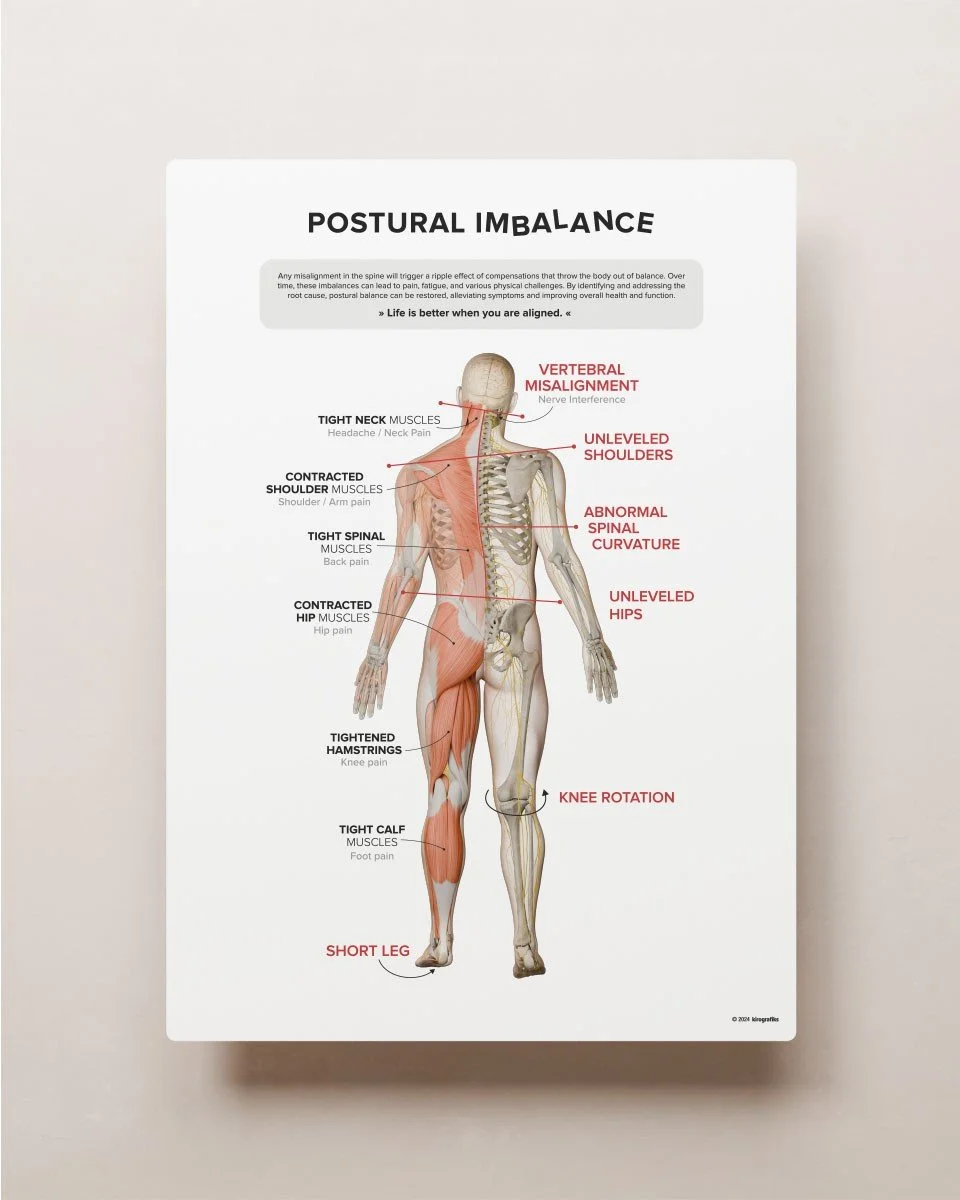
Shown here: how an imbalance at the feet or pelvis can travel up the body. Our measurements show where it starts for you. Poster by Kirografiks.
-
Consult · History and goals
What you feel, when it started, what you want to get back to.
-
Posture · PostureScreen
Photos analyzed for head, shoulder and pelvic position, front and side.
-
Motion · Digital range of motion
How far and how comfortably your spine moves, measured digitally.
-
Movement · Posture and squat screen
How you hold yourself and move under load.
-
Function · NDI, Oswestry and RAND-36
Standard questionnaires that score how symptoms affect daily life.
-
Imaging · Digital X-rays and PostureRay
When clinically necessary, X-rays analyzed with PostureRay to measure alignment.
YOUR REVIEW OF FINDINGS
We show you what we find
Your second visit is your review of findings visit. We sit down with you and go through your results in plain language: what is out of balance, what may be contributing to your symptoms, and what we recommend. Together, we decide the approach you want to continue with.
If our care isn’t the right fit for you, we will tell you.
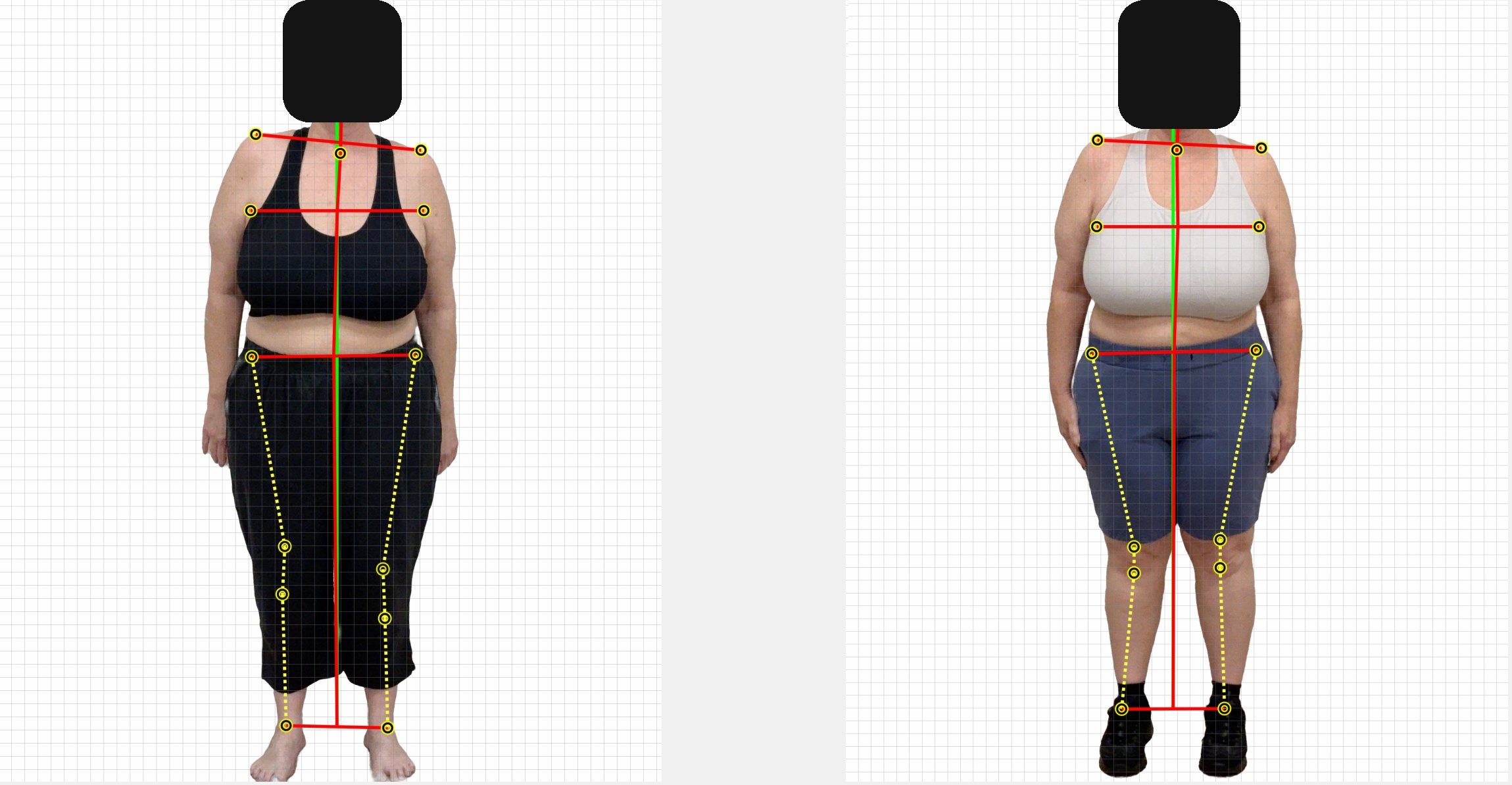
Shown here: front posture analysis, initial exam (left) and re-evaluation (right), same patient and view. Shared with the patient’s written permission, with her face and identifying details removed. Individual results vary.
Measured change for the same patient after 18 visits
-
Oswestry · low back: 46% → 24%
Low back disability; lower is better.
-
NDI · neck: 56% → 38%
Neck disability; lower is better.
-
RAND-36 · bodily pain: 23 → 58
0 to 100 scale; higher is better. Scores come from standard questionnaires completed at the first visit and at re-evaluation. Individual results vary.
-
01 · Listen
Your history, your goals and what you have already tried.
-
02 · Measure
Posture, motion, function and, when clinically necessary, X-rays.
-
03 · Explain
At your review of findings visit, your results are shown and explained, with a clear recommendation.
-
04 · Re-measure
The same measurements at re-evaluation, so you can see change.
Evaluation questions
-
Plan on 30 to 45 minutes for your physical exam and any X-rays, which gives us time to take a thorough history. After a car accident, plan on about 15 minutes more, since we also record your accident details for insurance and legal documentation.
-
Only if your exam findings show we need a better understanding of your condition. If so, the images help us determine the right care and treatment for you.
-
No. Many people come in to understand their posture, prepare for a sport or check on a child’s spine. As Dr. Gordon says, if you have a spine, we can treat you.
-
No referral is needed. Walk-ins are welcome; appointments are preferred.
-
Ask us about the evaluation when you call. Some insurance plans are accepted when coverage is available.
See where your spine stands
A measured evaluation in South Jordan comes first. Walk-ins are welcome; appointments are preferred. Hablamos español.
Two ways to book: call (801) 562-1531 and we’ll email your forms to you, or start online with the general & cash-pay forms or car crash forms and we’ll call you once we receive them.
Often paired with: Posture correction (CBP) · Digital X-rays · Scoliosis & ScoliBrace · Athlete screening